
This guide describes every step needed to adapt the M50 intake manifold to a M52TU (double vanos) engine with our dedicated complete kit including all of the necessary parts and hardware.
If you need a guide for M52 (simple vanos) or M54, installation may slightly differ but guides are coming soon along with dedicated conversion kits.
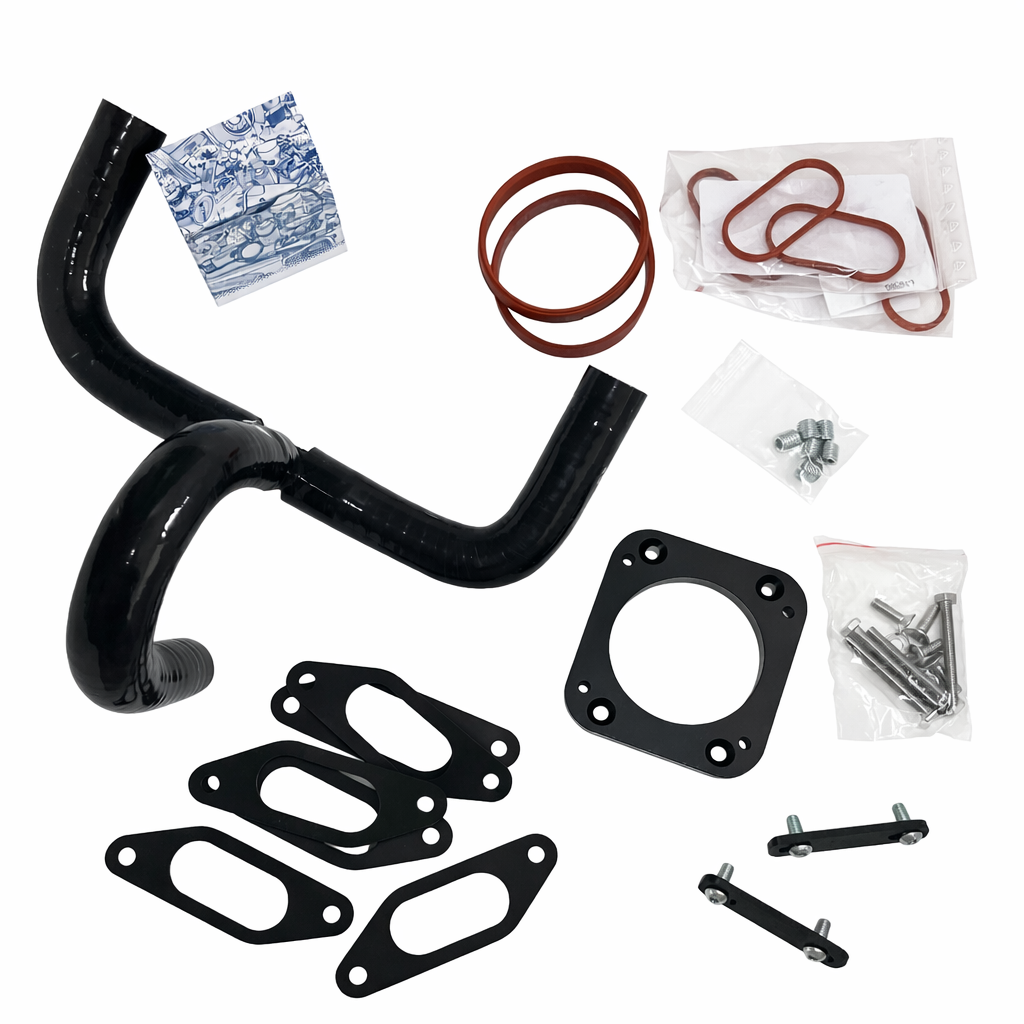
Throttle body adaptation
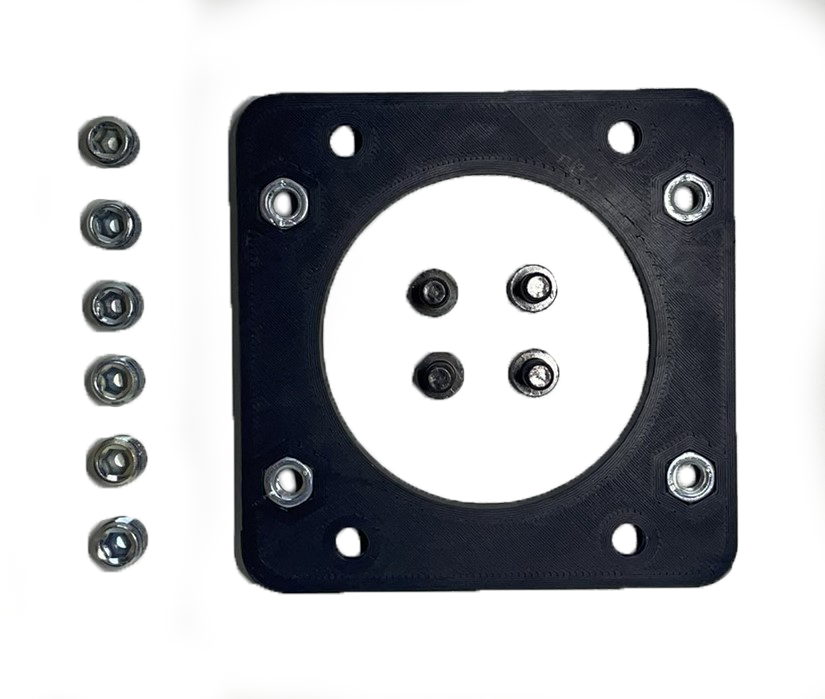
- Adapter plate: since the M52TU features a new throttle body with electronics, it largely differs from the M50 throttle body (which can’t be swapped because of the ECU’s architecture). Therefore, the throttle body needs to get higher, as on a M50 setup. To achieve this, you need the adapter plate that puts the throttle body in an appropriate position for both the intake manifold and throttle cables. The adapter plate can be sourced individually here but is also included in our complete kit.
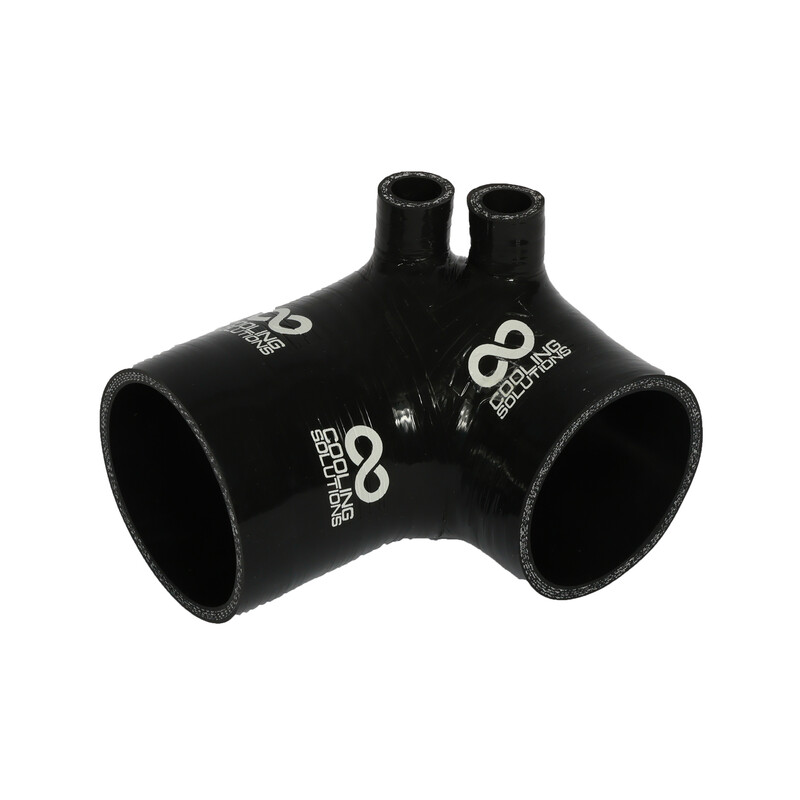
- Since we are re-routing the throttle body, the factory boots can’t be used anymore. You will have to use an air intake boot from the throttle body to the mass air flow sensor using the supplied silicone boot.
Intake manifold preparation
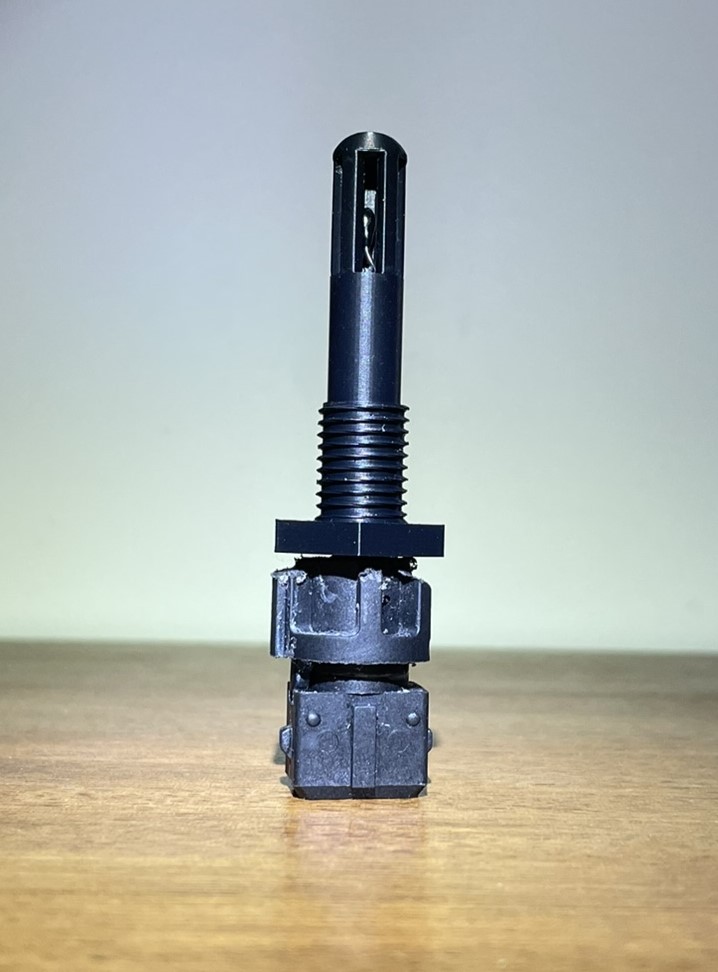
- IAT sensor: M50 IAT sensor and M52TU/M54 sensors connect to the intake manifold in a different way. M50 sensor is threaded and has a 2,5k ohms resistance while the M52/M52TU/M54 sensor clips into the manifold with an o-ring and has a different resistance. Therefore, you cannot use the M50 manifold so you have to thread your M52/M52TU/M54 sensor. You can choose to include the IAT sensor when ordering our conversion kit, or you can purchase the modified IAT sensor separately here. It features a 21mm hex (while the factory M50 version uses a 19mm hex) to ease installation. Be careful when tightening (3–5 Nm max!) and apply thread sealant to prevent any air leaks.
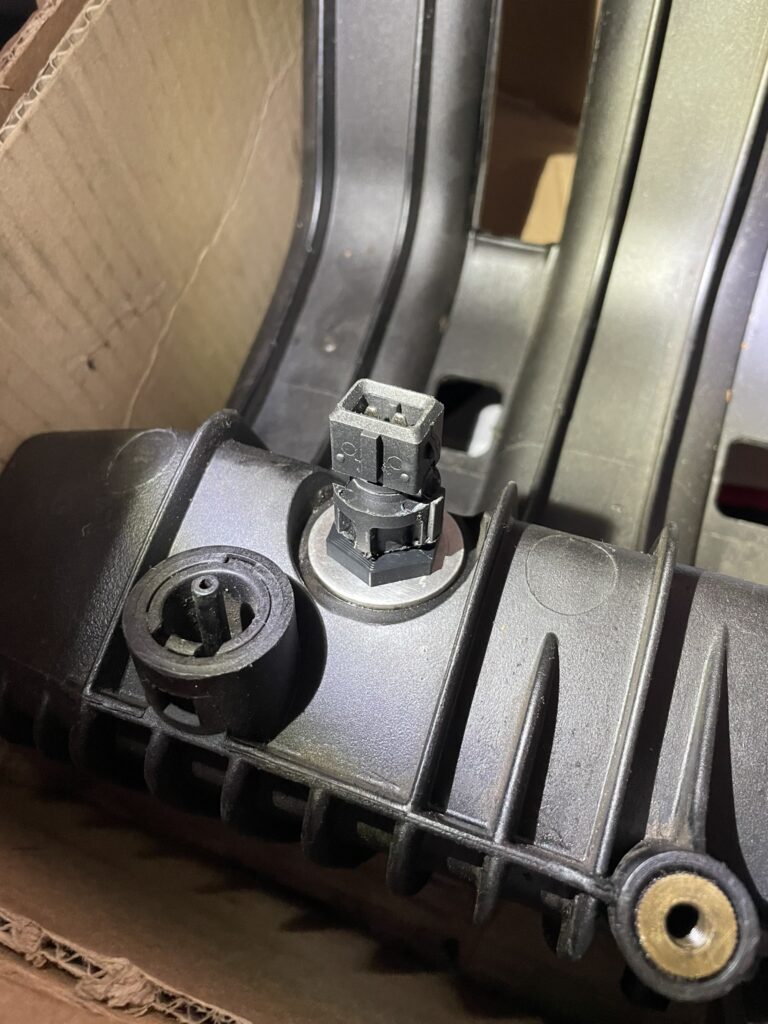
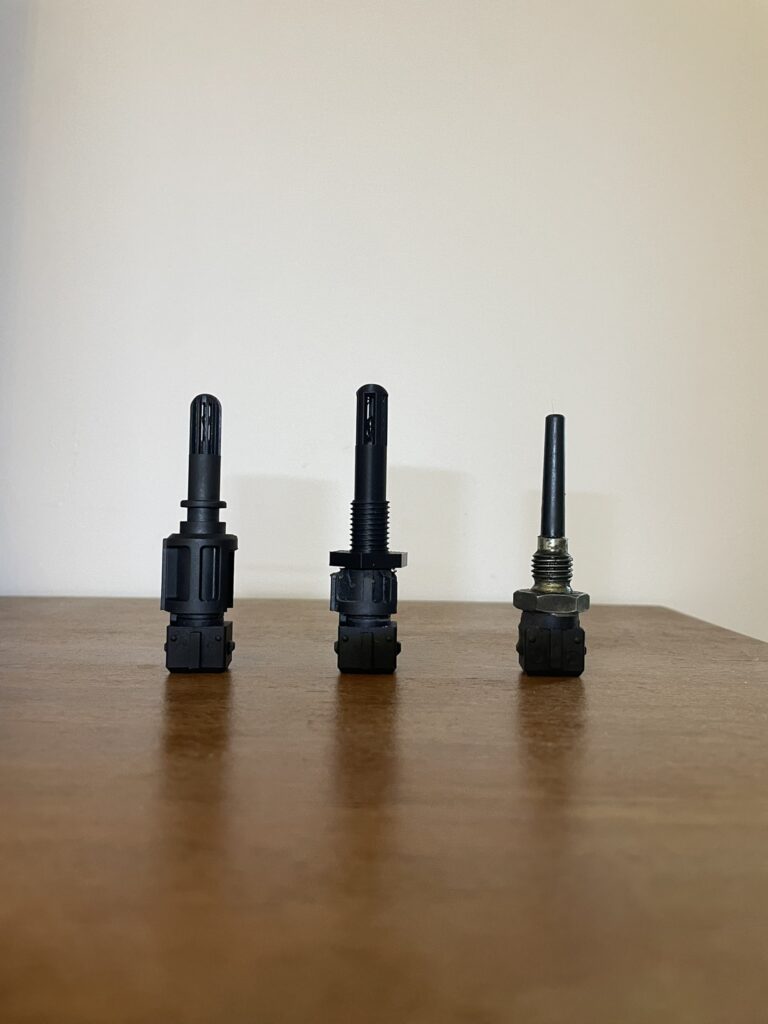
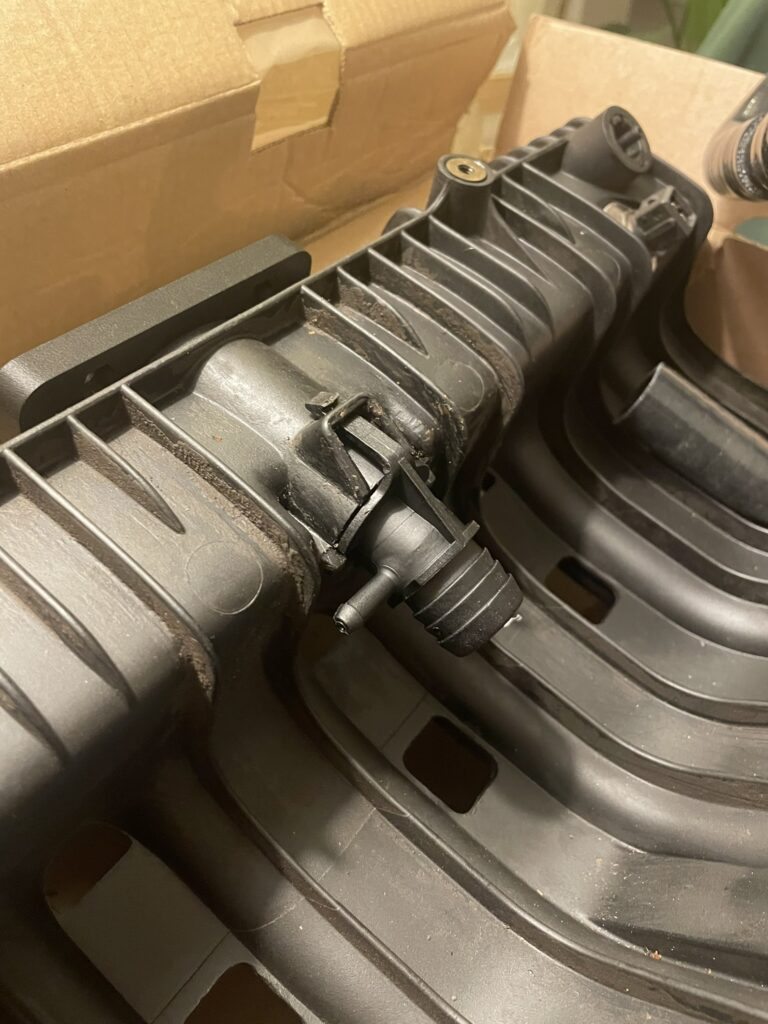
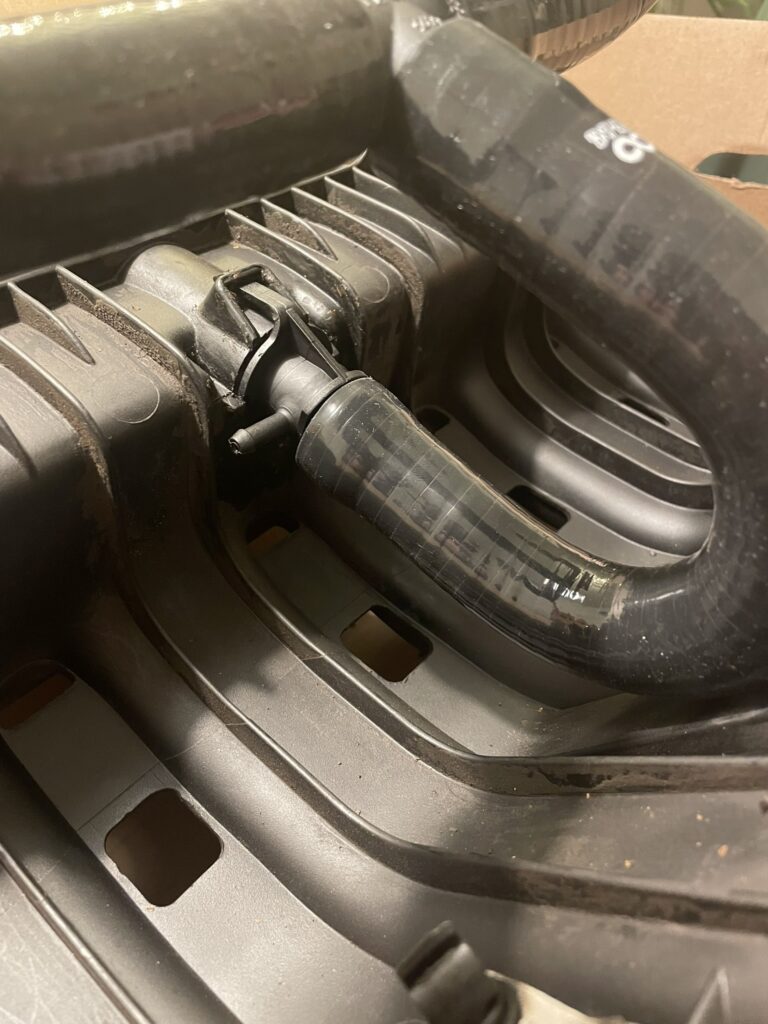
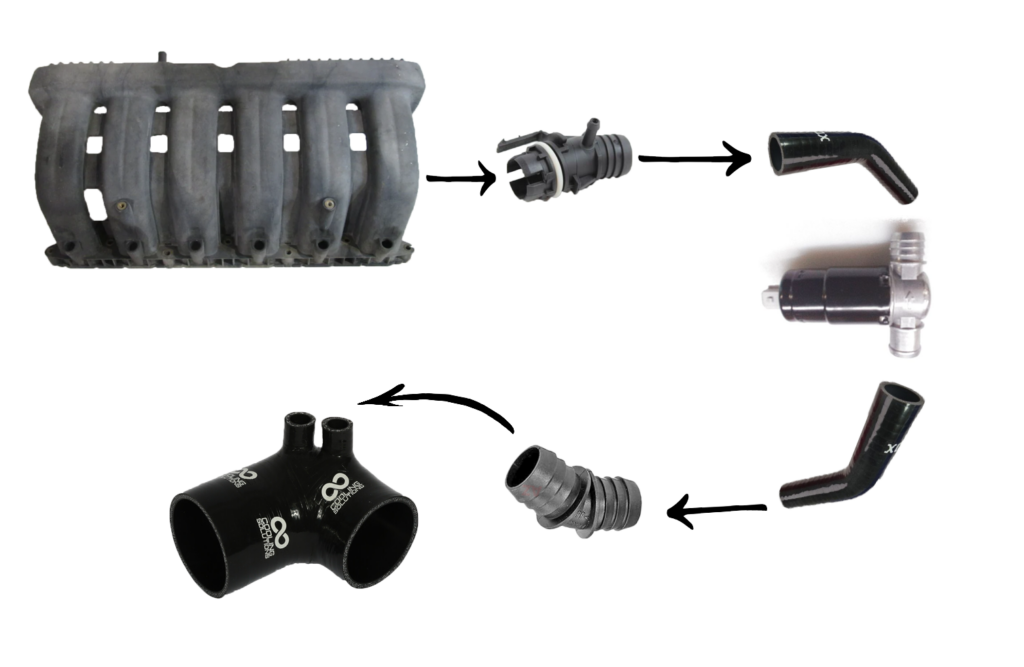
- Next, use the OEM fitting for the M50 manifold included to get the air from the ICV port into the 180° silicone hose. It also features a nipple that will be used to recirculate the fuel vapors from the fuel tank breather system. To achieve this, the kit includes the correct sized silicone hose, then goes to an adapter also included and you’ll have to connect the fuel line from the fuel tank breather to this adapter. M52TU engine takes the vacuum for the fuel pressure regulator from the intake manifold. You can reuse the other nipple already on the M50 manifold to route the vacuum ot the FPR. Now back to the ICV routing: the silicone hose goes to the T-fitting and then you’ll route two other silicones hoses:
- one will go the Idle Control Valve
- the other will go to the PCV system (so no need to delete it or replace it with a catch can)
- Diagram of the assemble is shown below.
Idle Control Valve (ICV)
While doing this swap, some people just go with the easy route of deleting the ICV. While it can be OK if it’s a track car only, I strongly advise you to keep the ICV management, especially if you happen to daily-drive your BMW. It will idle smoothly just how BMW engineers intended to.
First you need to block the ICV holes from the M52TU head. Grub screws are supplied in the kit and you can optionally order the appropriate thread tap if you don’t have one (M10x1.5 metric).
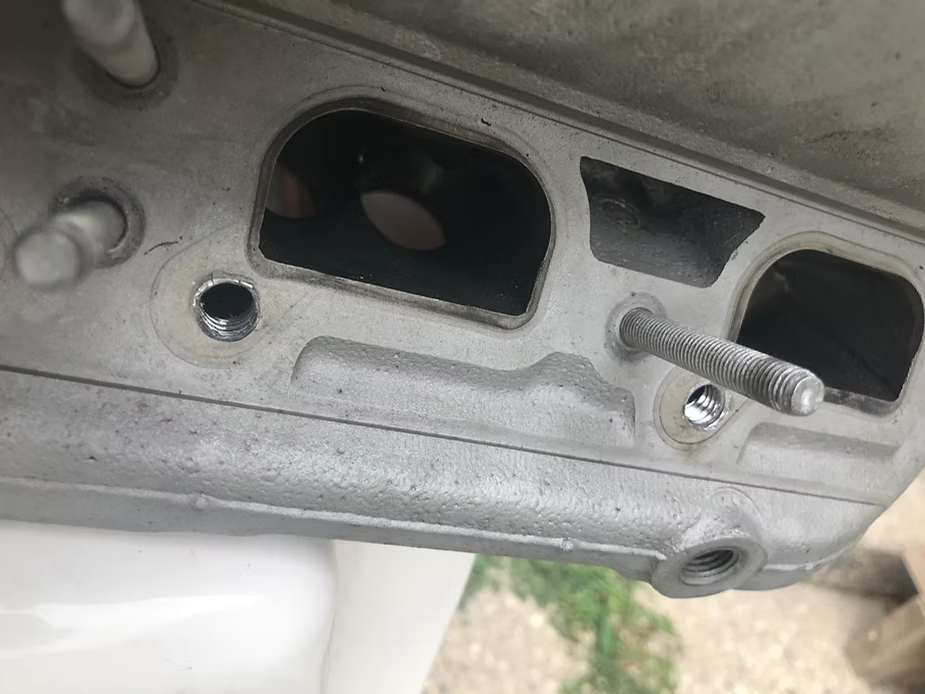
To avoid getting metal shavings into the head you should tape the intake ports to avoid any debris and make sure the valves are closed for the cylinder you are working in. If you are uncertain about this step, feel free to contact me through the contact form, I’ll be glad to guide you.
The air is routed from the main intake boot to the ICV through the silicone hose supplied in the kit. You simply need to install the fitting, also included in the kit, between the ICV hose and the intake hose.
Head Porting / Machining (optional)
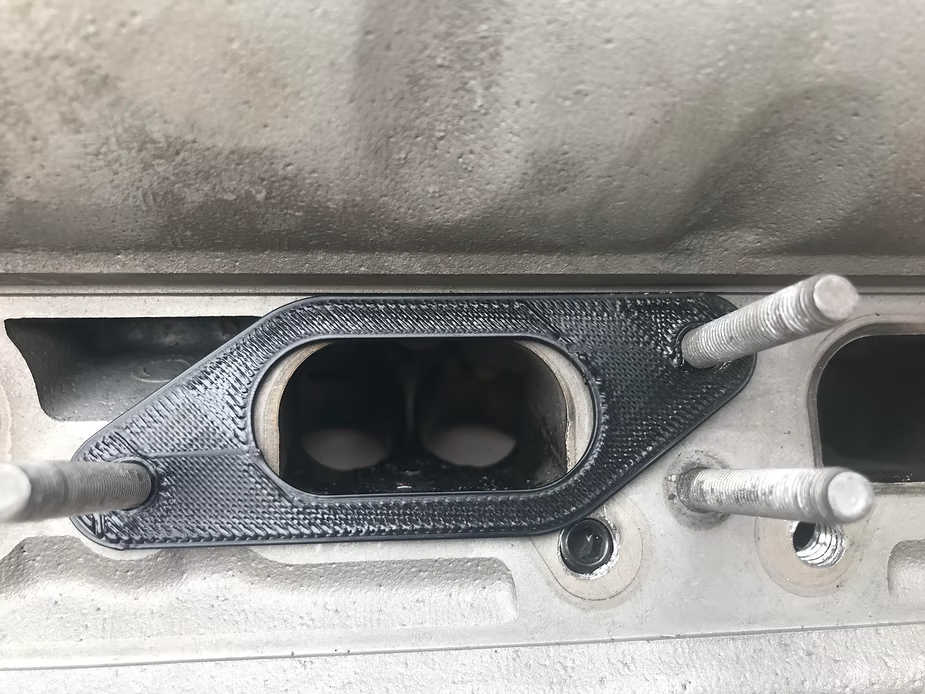
To get the maximum of the M50 manifold’s potential, you can machine the intake ports from the aluminium head of your M52TU which have a different shape, as you can see in the picture below. To guide you through this (optional step), you provide in our complete kit the machining templates to help you grind only the necessary material.
Fuel rail adaptation:
As the fuel rail inserts are placed differently compared to the M50 manifold, we supply the fuel rail brackets according to your setup. Some people go for bigger injectors like the Bosch ones that vary in length from the stock Siemens ones. You can select your setup while ordering our kit. If you have never touched your fuel injector, then you should have the stock Siemens ones. You’ll have to place the fuel rail in the opposite way compared to the stock M52TU placing. You also have to cut the unnecessary ‘legs’ from your fuel rail for it to fit with the M50 manifold.
[Image coming soon]
Next steps (expected gains and ECU tuning)
Now that you have fitted the M50 intake manifold, you should feel that your car is pulling stronger on the higher RPMs (>4000 rpm) and may face a slight loss of torque in the lower ends. This can be attenuated with tuning. You should also strongly consider getting a reputable tune that suits your new mod: as you’re allowing more air into the engine, at partial load the ECU will adapt the fuel mixture through O2 sensor readings. However, at full load (which is when you expect the most power) the ECU enters what’s called an “Open Loop Enrichment” based on the stock ECU tune. Since the stock ECU doesn’t have a wideband O2 sensor, it can’t adapt at full load nor reach the targeted air to fuel ratio (AFR). Consequently, your engine will have a leaner mixture which can result in harm in the long-term, not to mention that you don’t obtain all of the M50 intake manifold’s performance potential.
You can go to the ECU tuning section to get the proper tune that suits your engine and upgrades. All tunes are prepared by myself according to your setup. You can save a backup file of your stock tune and flash the tuned file thanks to your fully tested k+d can cable, available here.